
Changing Role of Women in Britain: Life in the United Kingdom, A Journey to Citizenship
Chapter 2 – Part II
UK Nationality Home Chapter 2 Part I Part II Part III Chapter 3 Part I Part II Part III Part IV Chapter 4 Part I Part II Part III Part IV Part V Part VI Chapter 5 Part I Part II Part III Part IV Part V Part VI Part VII Chapter 6 Part I Part II Part III Part IV Part V
The Changing Role Of Women
In nineteenth-century Britain, families were usually large and, in most households, men, women, and children all contributed towards the family wage. Although they were economically very important, women in Britain had fewer rights in law than men. Until 1857, a married woman had no right to divorce her husband, and until 1882 a woman’s earnings, along with any property or money she brought to the marriage, automatically belonged to her husband.
In the late nineteenth and early twentieth centuries, an increasing number of women campaigned and demonstrated for greater rights and, in particular, the right to vote.
Women’s Rights in Britain
However, the protests and demonstrations were halted during the First World War, as women joined in the war effort and took on a much greater variety of work than they had done before. Women (over the age of 30) were finally given the right to vote and to stand for election for Parliament after the War had ended in 1918.
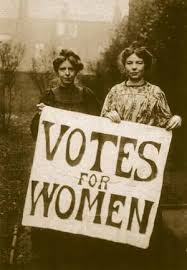
It wasn’t until 1928 that women in Britain received voting rights at the same age as men. Despite these improvements, women still faced discrimination in the workplace. When a woman married, it was quite common for her to be asked to leave work by her employer.
Women in the 1960 Britain
Many jobs were closed to women, and women found it very difficult to enter university. The 1960s and 70s saw increasing pressure from women for equal rights and, during this period, laws were passed giving women the right to equal pay and prohibiting employers from discriminating against women because of their sex.
Women in Britain make up 51 percent of the population, and 45 percent of the workforce. Girls, as a whole, leave school today with better qualifications than boys, and there are now more women than men at university. Employment opportunities for women now are much greater than they were in the past.
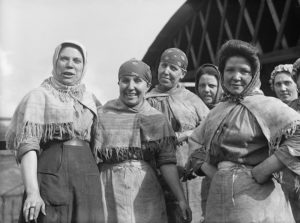
Although women continue to be employed in traditionally female areas, such as healthcare, teaching, secretarial, and sales, there is strong evidence that attitudes are changing and that women are doing a much wider range of work than before. Research shows that today very few people believe that women in Britain should stay at home and not go out to work.
Women in Britain today
Today, almost three-quarters of women with children of school age are in paid work. In many households, women continue to have a major share in childcare and housework, but here too there is evidence of greater equality, with fathers taking an increasing role in raising the family and household chores.
Despite this progress, many argue that more needs to be done to achieve greater equality between women and men – particularly in the workplace. Women in Britain do not have the same access as men to the promotion and better- paid jobs, and the average hourly rate of pay for women is about 20 percent lower than it is for men.
More Info On- Daily life in Britain, Living and Working in the UK/England, UK Driving Rules England