
ENGLAND HISTORY:
OFFICIAL NAME:
United Kingdom of Great Britain and Northern Ireland
Geography:
Area: 243,000 sq. km. (93,000 sq. mi.); slightly smaller than Oregon.
Cities: Capital–London (metropolitan pop. about 7.2 million). Other cities–Birmingham, Glasgow, Leeds, Sheffield, Liverpool, Bradford, Manchester, Edinburgh, Bristol, Belfast.
Climate: Generally mild and temperate; weather is subject to frequent changes but too few extremes of temperature.
England History: Official name People Empire Source Links: Background Notes – US state dept. England History & Culture
People:
Nationality: Noun–Briton(s). Adjective–British.
Population (2004 est.): 60.27 million.
Major ethnic groups: British, Irish, West Indian, South Asian.
Major languages: English, Welsh, Irish Gaelic, Scottish Gaelic.
Government:
Type: Constitutional monarchy.
Constitution: Unwritten; partly statutes, partly common law and practice
People:
The United Kingdom’s population in 2004 surpassed 60 million–the third-largest in the European Union and the 21st-largest in the world. Its overall population density is one of the highest in the world. A group of islands close to continental Europe, the British Isles have been subject to many invasions and migrations, especially from Scandinavia and the continent, including Roman occupation for several centuries.
Contemporary Britons are descended mainly from the varied ethnic stocks that settled there before the 11th century. The pre-Celtic, Celtic, Roman, Anglo-Saxon, and Norse influences were blended in Britain under the Normans, Scandinavian Vikings who had lived in Northern France. Although Celtic languages persist in Wales, Scotland, and Northern Ireland, the predominant language is English, which is primarily a blend of Anglo-Saxon and Norman French.
ENGLAND HISTORY:
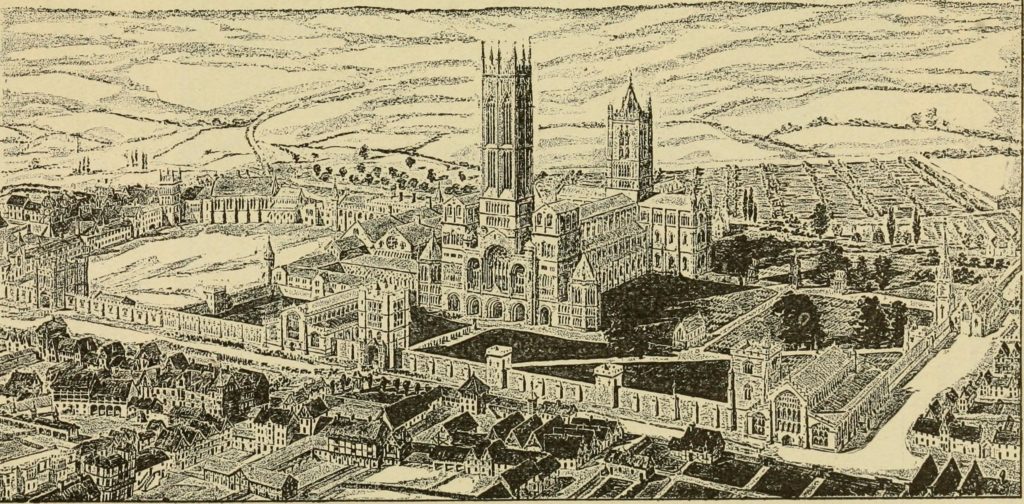
The Roman invasion of Britain in 55 BC and most of Britain’s subsequent incorporation into the Roman Empire stimulated development and brought more active contacts with the rest of Europe. As Rome’s strength declined, the country again was exposed to invasion–including the pivotal incursions of the Angles, Saxons, and Jutes in the fifth and sixth centuries AD–up to the Norman conquest in 1066.
Norman rule effectively ensured Britain’s safety from further intrusions; certain institutions, which remain characteristic of Britain, could develop. Among these are a political, administrative, cultural, and economic center in London; a separate but established church; a system of common law; distinctive and distinguished university education; and representative government.
Union:
Both Wales and Scotland were independent kingdoms that resisted English rule. The English conquest of Wales succeeded in 1282 under Edward I, and the Statute of Rhuddlan established English rule 2 years later. To appease the Welsh, Edward’s son (later Edward II), who had been born in Wales, was made Prince of Wales in 1301. The tradition of bestowing this title on the eldest son of the British Monarch continues today. An act of 1536 completed the political and administrative union of England and Wales.
While maintaining separate parliaments, England and Scotland were ruled under one crown beginning in 1603, when James VI of Scotland succeeded his cousin Elizabeth I as James I of England History. In the ensuing 100 years, strong religious and political differences divided the kingdoms. Finally, in 1707, England and Scotland were unified as Great Britain, sharing a single Parliament at Westminster.
British Empire Facts
Ireland’s invasion by the Anglo-Normans in 1170 led to centuries of strife. Successive English kings sought to conquer Ireland. In the early 17th century, large-scale settlement of the north from Scotland and England began. After its defeat, Ireland was subjected, with varying degrees of success, to control and regulation by Britain.
The legislative union of Great Britain and Ireland was completed on January 1, 1801, under the name of the United Kingdom. However, armed struggle for independence continued sporadically into the 20th century. The Anglo-Irish Treaty of 1921 established the Irish Free State, which subsequently left the Commonwealth and became a republic after World War II. Six northern, predominantly Protestant, Irish counties have remained part of the United Kingdom.
British Expansion and Empire:
Begun initially to support William the Conqueror’s (c. 1029-1087) holdings in France, Britain’s policy of active involvement in continental European affairs endured for several hundred years. By the end of the 14th century, foreign trade, originally based on wool exports to Europe, had emerged as a cornerstone of national policy.
The foundations of sea power were gradually laid to protect English trade and open up new routes. The defeat of the Spanish Armada in 1588 firmly established England History as a major sea power. Thereafter, its interests outside Europe grew steadily.
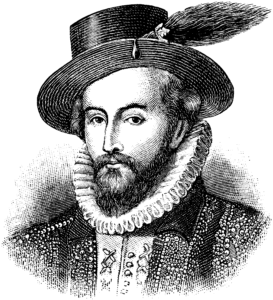
Attracted by the spice trade, English mercantile interests spread first to the Far East. In search of an alternate route to the Spice Islands, John Cabot reached the North American continent in 1498. Sir Walter Raleigh organized the first, short-lived colony in Virginia in 1584, and permanent English settlement began in 1607 at Jamestown, Virginia.
During the next two centuries, Britain extended its influence abroad and consolidated its political development at home. Great Britain’s industrial revolution greatly strengthened its ability to oppose Napoleonic France. By the end of the Napoleonic Wars in 1815, the United Kingdom was the foremost European power, and its navy ruled the seas.
Peace in Europe allowed the British to focus their interests on more remote parts of the world, and, during this period, the British Empire reached its zenith. British colonial expansion reached its height largely during the reign of Queen Victoria (1837-1901).
British Colonies
Queen Victoria’s reign witnessed the spread of British technology, commerce, language, and government throughout the British Empire, which, at its greatest extent, encompassed roughly one-fifth to one-quarter of the world’s area and population.
British colonies contributed to the United Kingdom’s extraordinary economic growth and strengthened its voice in world affairs. Even as the United Kingdom extended its imperial reach overseas, it continued to develop and broaden its democratic institutions at home.
20th Century:
By the time of Queen Victoria’s death in 1901, other nations, including the United States and Germany, had developed their own industries; the United Kingdom’s comparative economic advantage had lessened, and the ambitions of its rivals had grown.
The losses and destruction of World War I, the depression of the 1930s, and decades of relatively slow growth eroded the United Kingdom’s preeminent international position of the previous century.
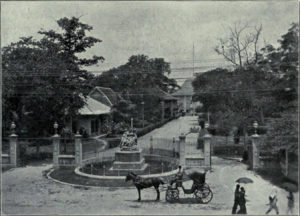
Britain’s control over its empire loosened during the interwar period. Ireland, with the exception of six northern counties, gained independence from the United Kingdom in 1921. Nationalism became stronger in other parts of the empire, particularly in India and Egypt.
In 1926, the United Kingdom, completing a process begun a century earlier, granted Australia, Canada, and New Zealand complete autonomy within the empire. They became charter members of the British Commonwealth of Nations (now known as the Commonwealth), an informal but closely-knit association that succeeded the empire.
British Empire Countries
Beginning with the independence of India and Pakistan in 1947, the remainder of the British Empire was almost completely dismantled. Today, most of Britain’s former colonies belong to the Commonwealth, almost all of them as independent members. There are, however, 13 former British colonies–including Bermuda, Gibraltar, the Falkland Islands, and others–which have elected to continue their political links with London and are known as the United Kingdom Overseas Territories.
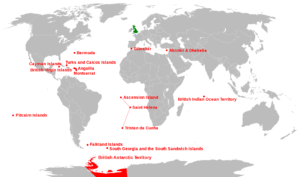
Although often marked by economic and political nationalism, the Commonwealth offers the United Kingdom a voice in matters concerning many developing countries. In addition, the Commonwealth helps preserve many institutions deriving from British experience and models, such as parliamentary democracy, in those countries.
England Train Travel – Information on getting a train ticket, the train system
More Info On- Bank of England and Museum, Cabinet War Rooms, Cambridgeshire