
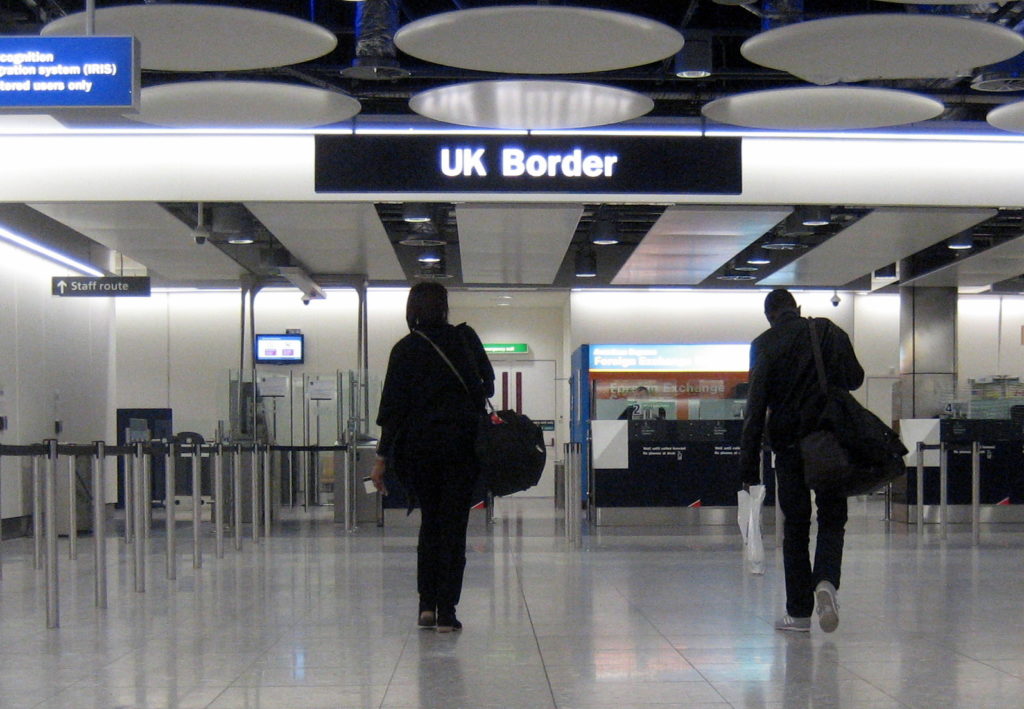
Here are some tips on England business travel:
In theory, official working hours are normally 9:00 a.m. to 5:00 p.m. Monday to Friday. Generally, the British prefer to stay late in the office than to take work home with them.
Government offices close for lunch between 1:00 p.m. and 2:00 p.m. but stay open until 5:30 p.m.
England business travel
Appointments Conversation Holidays Topics to discuss Topics to avoid
The opening hours for shops are almost completely deregulated, though there are some restrictions on Sunday trading, and many outlets are open 24/7 even outside the major urban areas.
Banks are generally open 9:30 a.m. to 4:30 p.m. Monday-Friday.
Appointments should be made at least a few days in advance and, ideally, confirmed on arrival in the UK. If you are being late for the appointment, do call and let your host know. Cold calling is not appreciated.
In July, August, Bank holidays in May and Easter, you would see a lot of people taking leaves to go to exotic places on a vacation. UK industry closes almost completely between Christmas and New Year.
The UK has about eight national holidays a year. This is the list of holidays up to 2007.
England and Wales
2006
2007 New Year’s Day 2 Jan 1 Jan Good Friday 14 Apr 1 Jan Easter Monday 17 Apr 6 Apr Early May Bank Holiday 1 May 9 Apr Spring Bank Holiday 29 May 7 May Summer Bank Holiday 28 Aug 28 May Christmas Day 25 Dec 27 Aug Boxing Day 26 Dec 25 Dec
There is something called daylight saving so the clock changes by an hour. e.g. when you wake up on 30th October 2005 at 08:00, it will actually be 09:00. It’s not usual for many countries. Interesting.
BRITISH SUMMER TIME For 2005-2007 inclusive, the summer-time periods begin and end respectively on the following dates at 1.00am Greenwich Mean Time:
In 2005: the Sundays of 27 March and 30 October
In 2006: the Sundays of 26 March and 29 October
In 2007: the Sundays of 25 March and 28 October
Appointments:
You should not arrive too promptly for social events – but aim to arrive a respectable fifteen minutes after the specified time; thus, if a dinner invitation states ‘7:30 p.m. for 8:00 p.m.’, it means that you will be expected at about 7:50 p.m.
Negotiations:
In keeping with their undemonstrative nature, British businessmen approach their work in a detached way that regards objective facts and solid evidence as the only legitimate forms of persuasion; feelings and personal relationships are usually irrelevant.
Conversation:
Most Britons are reserved by nature and often find it difficult to indulge in small talk with a complete stranger. Don’t be offended when traveling on the London underground when people would use newspapers and books as ‘shields’.
Generally speaking, northerners tend to be more immediately friendly than southerners. Don’t be surprised if people outside the ‘Home Counties’ of southeast England address you in overly affectionate terms such as ‘dear’ or ‘love’ (whether you are a man or a woman).
For the most part, the British speak in low, moderate, measured tones without raising the voice or gesticulating wildly for emphasis.
They also like to maintain their own personal space and will shy away from those they find invasive.
England Business Travel
Although not all Britons are particularly articulate, you should make an effort to speak in complete sentences; the British generally find the North American habit of trailing off in mid-sentence rather irritating. Nor should you interrupt someone; intonation conveys one has finished speaking and, in British English, the voice normally goes down at the end of an affirmative sentence.
Britons prefer to avoid animated discussions.
It is always advisable to try to initiate conversation with open questions rather than an assertion of a personal point of view.
The British are largely tolerant and open-minded but every nation. Almost all Britons, however, are proud of their culture and heritage and this should be respected not mocked.
Avoid repeating someone’s name more than once in a conversation.
The ‘stiff upper lip’ is not just the stuff of fiction and emotional displays, positive or negative, are generally frowned upon.
Gestures such as backslapping and hugging are discouraged and a wide distance should be maintained between participants in a conversation.
Maintaining eye contact may be necessary when you are trying to emphasize important points but you must avoid any temptation to ‘eyeball’.
Talking loudly is unacceptable and shouting is beyond the pale.
Some old-fashioned interlocutors may not hear you if you have your hands in your pockets. The British do not gesticulate frantically.
British are polite and courteous for the most part. They expect to be treated with respect, in return for which they will treat you with respect.
Topics to begin a conversation:
The weather (always a safe starting point)
Sport (football/soccer, now Cricket also after winning over Australia) ·
British literature, art, and popular music
Positive experiences in the UK
Food and curries
Topics to avoid:
Northern Ireland
Religion – always avoid
The Queen and the Royal Family
Politics
The European Union, ‘Brussels’ and the euro
The Middle East
Personal questions about a person’s background, religion, occupation, etc.
Race and immigration
Traveling by Train in England and London – Information on getting and reading your train ticket, the high speed, and regional train system; a link of train schedules.
More Info On- Birmingham England Travel Guide, England Travel Guide